China Array Plastics
A Full Service Custom Injection Molder of High Performance Thermoplastics
Manufacturing in China Since 1980
Home
Molding:
Injection Molding
Performance Polymers
Molds
Prototypes
Post Molding/ Accessories
Quality Control
CAD/CAM
Customers:
OEM's
Distributors
Designers
Intellectual Property
Applications
Company:
Management
History
Wuhan, China
Press
Photos
Contact Us
Quotations

MOLD MAKING: PRODUCTION & PROTOTYPE MOLDS

Production Molds for High Performance Thermoplastics (HPTP)

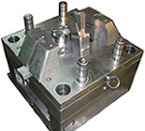
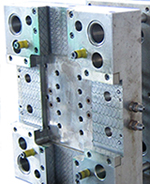
High performance thermoplastics (HPTP) mold differently from commodity plastics. HPTP's extremely high melt temperatures and unique flow characteristics make mold design critical to quality production. The mold designer must work closely with the materials engineer (and ultimately the process engineer) to produce a mold that matches the high performance material's molding characteristics. It takes a collaborative effort to produce a HPTP mold.

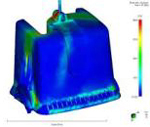
Proper design of the cooling channels inside the mold is absolutely essential for a HPTP mold. The channels must be sufficiently sized and correctly located to accurately control the mold's temperature during molding. (HPTP molds run so hot that they are cooled with oil based temperature controllers, instead of the water based temperature controllers used for standard plastics). Without the proper cooling design the mold will overheat after several shots making full scale production impossible. It is not unusual to have a mold built for molding standard, commodity plastics produce several good samples of a HPTP component, only to have it fail once full scale production commences, due to inadequate and poorly placed cooling channels.

Tooling Review

Gating and venting are similarly critical to HPTP molds. Different high performance plastics have different melt points and flow characteristics. These have to be accounted for in gating, venting, core pulls and other aspects of the mold's construction and operation.

Mold tolerances must be tight and the injection molding machine's clamp tonnage must be appropriate to the the part's shot size to withstand the higher pressure that HPTP's are molded at to eliminate flashing, poor parting lines and other defects.

Molds: Quality & Maintenance

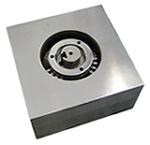
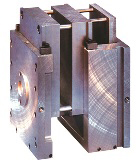
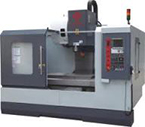
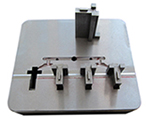
The steel, design, workmanship and tight tolerances of China Array's molds are critical to HPTP molding. Made from the best quality steel, such as AISI H13, specially formulated for high temperature, using state-of-the-art CNC and EDM machine centers combined with precision measuring and quality control instruments, and an advanced CAD/CAM software system enables China Array to produce complex, sophisticated molds with tolerances down to 0.001 mm. Zeiss CMM (Coordinate Measuring Machines) and laser inspection technologies used at each stage in mold production insure Quality Control of the mold and precise tolerances. Molds kept on China Array's premise are maintained and periodically overhauled throughout the mold's productive life.
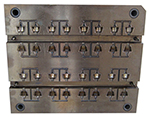
China Array adheres to The Society of the Plastics Industry (SPI) Mold Standards & Classifications.

Prototype Molds

Prototype Molds:
From 100 to 10,000 Parts

High quality molds are prerequisite for molding High Performance Thermoplastics. The steel, heat treatment, mechanical operation etc. for HPTP molds are several cuts above those required for standard plastics molds. However, for a customer needing a simple, inexpensive prototype mold, China Array can move in the opposite direction and provide a manually operated mold made from low cost domestic, non-hardened steel at a very competitive price.

Everything else in the process described above for making a high quality HPTP mold is the same, the only difference is the low cost steel for the mold and the simplified mechanics. China Array's sophisticated CAD/CAM capability and quick turn around on mold production coupled with its location in China and access to low cost domestic steel for molds makes it an ideal partner for Prototype Molding. Basically, the customer gets a precision cavity mold that renders dimensionally accurate prototype parts (up to 10,000 pieces depending on the mold material) at a very competitive price.

Prototype Molds Yield a Wealth of Information

Information related to the prototype mold, CAD/CAM data bases, processing parameters, part and mold designs, etc., is retained electronically. As the prototype moves through field testing, the stored information allows for quick, accurate, inexpensive changes to the product, mold or injection molding process to perfect the finished good before large scale production.

Making a mold for prototypes has several advantages over Rapid Prototyping a single part. First, the mold can produce up to 10,000 pieces for large scale in field testing: and the parts coming out of the mold are made from the same material the the actual production model will be made from, which is not always the case with Rapid Prototypes. Second, by actually having a mold built, the customer gains a wealth of information on mold design and the injection molding processing, which can be invaluable when taking manufacturability into account in product design.

China Array's US and Chinese offices are outfitted with identical CAD systems, ProEngineering CAD software considered the best in the industry, and MasterCam9, also a recognized industry leader. Collaborative web conferencing allows engineers at different sites to work simultaneously on CAD/CAM files. The firm also utilizes digital video and photography to communicate product development, mold construction and injection molding processing issues between parties.

Zeiss
Coordinate
Measuring
Machine
Cincinnati
Milacron
Sabre 12
Machining
Center
EDM
(Electric
Discharge
Machine)
Wire Cutter

Copyright © 2001 China Array & ChinaArray.com: All rights reserved.